“Pictures first, text second. We’re making a magazine, not writing a book.” That was the mantra Hans Hatwig drilled into his staff. He was the founder, art director, graphic designer, photographer, and editor-in-chief of the youth magazines *Poster* and *OKEJ* from 1974 to 1989. He always kept the focus on the pictures. And they had to be top-notch.
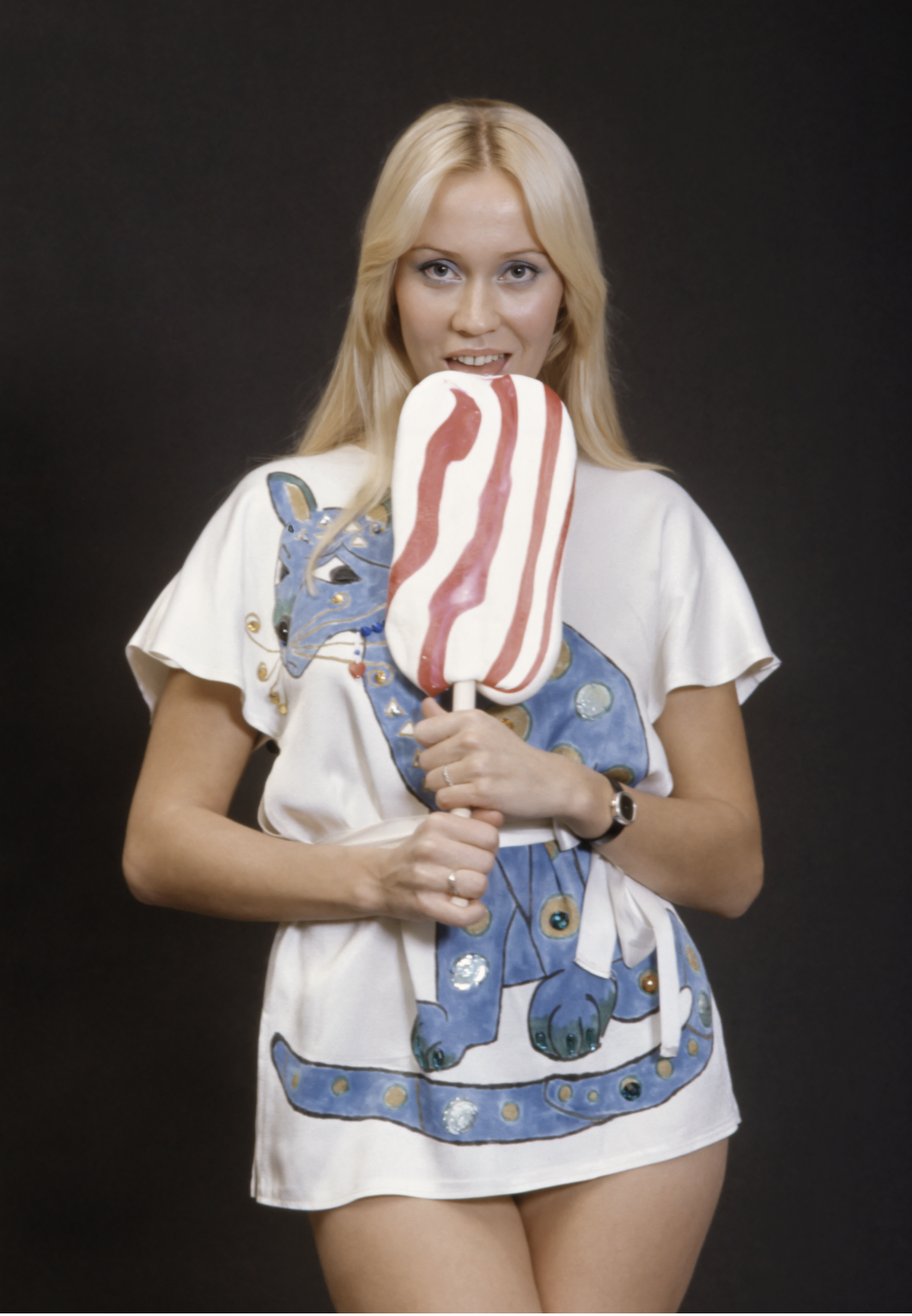
Hatwig trained the raw talents Göran Lindsjöö and Ulf Magnusson to become world-class photographers. Göran worked in his studio on S:t Eriksgatan in Stockholm, while Ulf worked out in the field. Their photos were razor-sharp, well-composed, and meticulously lit—often featuring a theme and fun props.
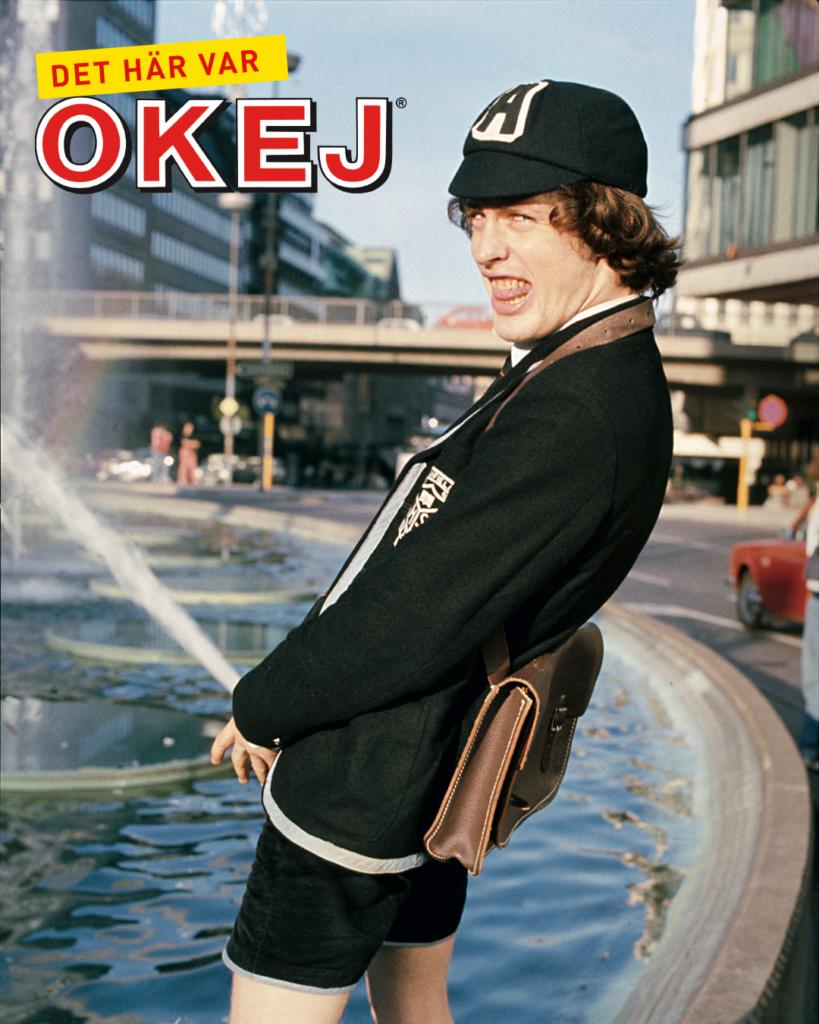
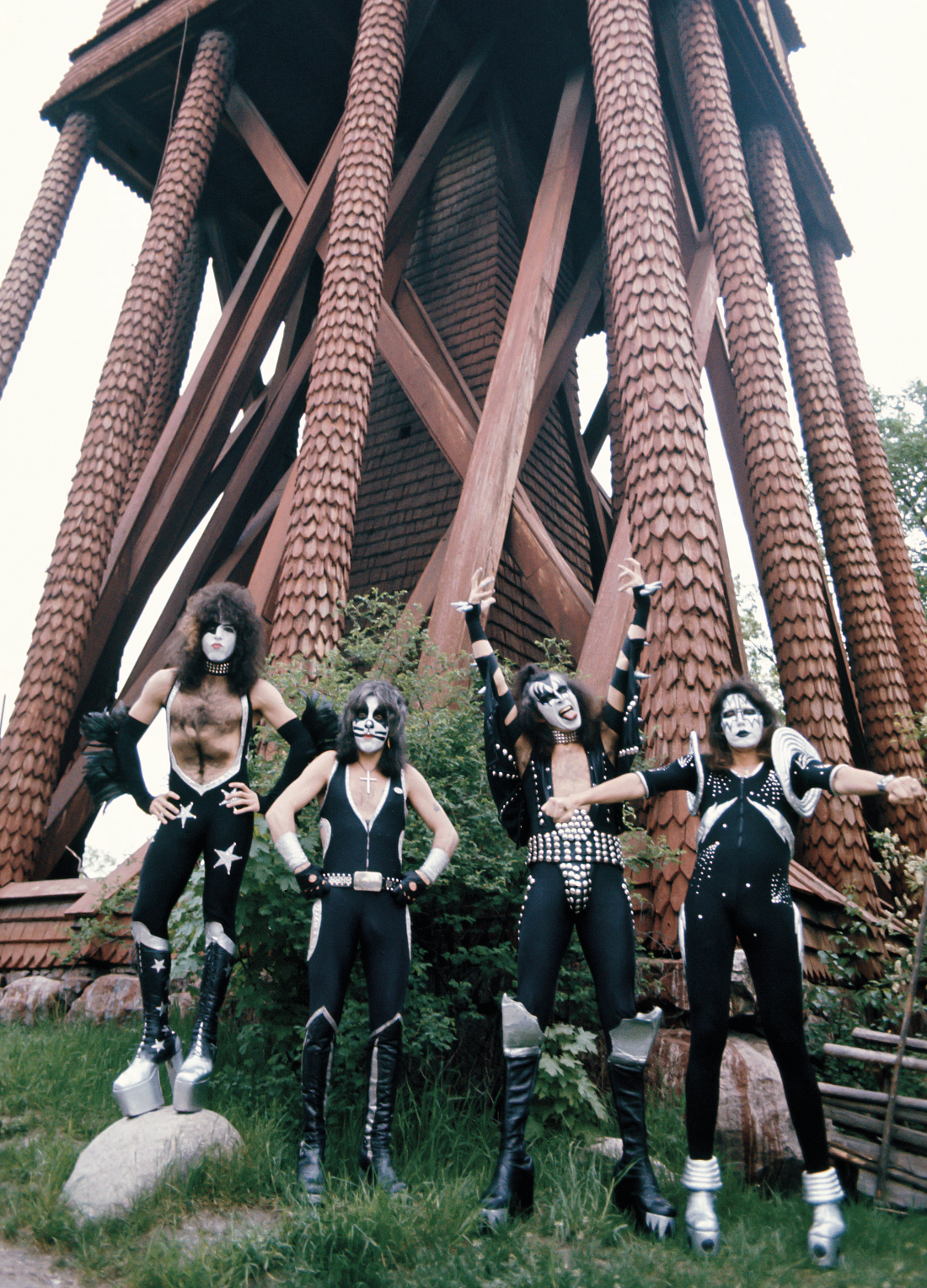
The pop stars who were most popular among the readers of *Poster* and *OKEJ* represented the kind of artistry that the rest of the media establishment looked down on or simply ignored. As a result, the two magazines gained a monopoly on grandiose and colorful global stars like Twisted Sister, AC/DC, Kylie Minogue, Depeche Mode, Metallica, Kiss, and Samantha Fox—performers who gave their all and had a twinkle in their eyes. Hans, Ulf, and Göran had almost unlimited time when photographing international celebrities visiting Sweden.
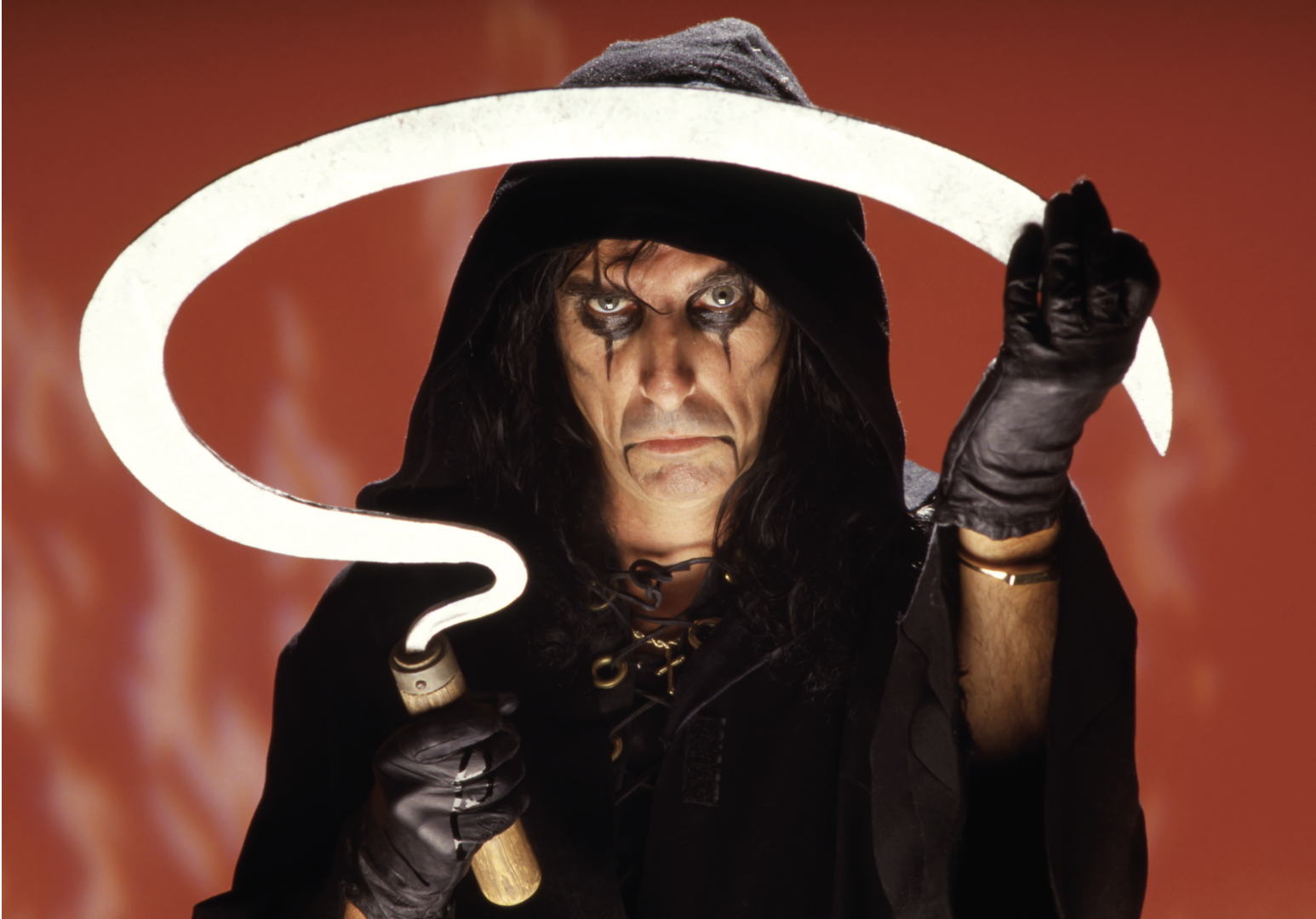
A selection from their exclusive archive: Alice Cooper as Saint Lucia, Van Halen singer David Lee Roth swimming in Lake Flaten outside Stockholm, a crayfish party with Mötley Crüe on an archipelago boat, Lena Philipsson as a fairy-tale princess, the otherwise peaceful Peter LeMarc aiming a firearm, Ozzy Osbourne as a mad scientist, and the last photo of Metallica bassist Cliff Burton before he was killed in a bus crash in Småland just 12 hours later.
No other newspapers in the world went to such lengths to produce exclusive, meticulously planned photo shoots like these.
The images, often of scantily clad people, were meant to feel a bit forbidden and borderline indecent. They were supposed to be eye-catching, stir up emotions, and even cause a bit of a stir. Hans Hatwig was the first in the Swedish media to realize that sex sells. Nowadays, almost all media outlets do the same.
The photos inspired several generations of young people to start playing music themselves. Ola Salo, the lead singer of The Ark, has said:
– When we formed The Ark, we took a picture of ourselves and added an OKEJ logo in one corner of it. Then we hung the picture in the rehearsal space, thinking that maybe someday we could end up on an OKEJ poster.
When *The Book of OKEJ: The Biggest Pop Magazine of the 1980s* was released in 2010, Aftonbladet music critic Markus Larsson wrote: “There is no better Swedish historical record of the 1980s and its most popular TV shows, artists, and hairstyles than OKEJ.”
While other media outlets missed much of what the 1970s and 1980s had to offer, Poster and OKEJ were able to amass a unique collection of images. From these tens of thousands of photos, we have selected some of the best for the exhibition “Det här var OKEJ.”